
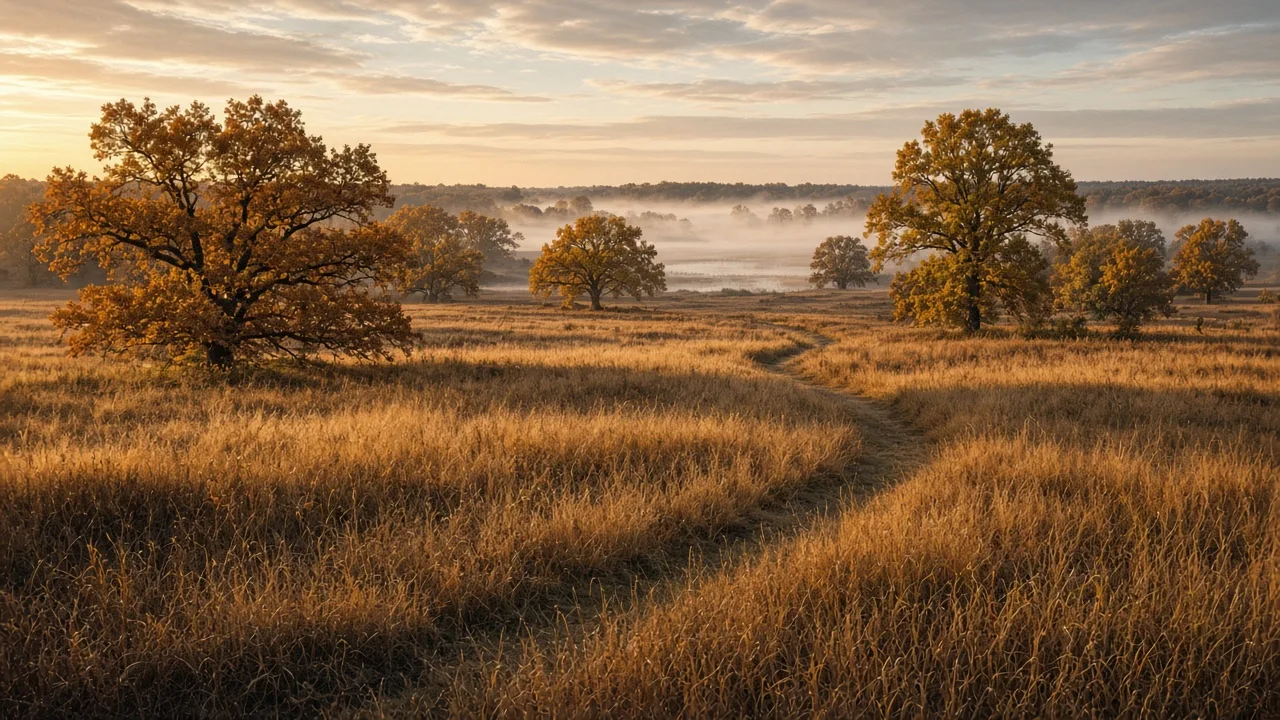
Hunting season in the lake country.
Washburn County is deer, bear, turkey, and grouse country, and the reason is simple: more than 148,000 acres of public forestland sit inside the county line. From the county forest to the state wildlife areas to the 30,000-acre Crex Meadows block west of town, this guide maps the public ground, what each piece is good for, and how to hunt it like a neighbor.
All Spooner field guidesThe big block
The Washburn County Forest.
The backbone of hunting here is the Washburn County Forest, roughly 149,000 acres of county-owned timberland open to regulated public hunting, with only the developed high-use sites like campgrounds and youth camps signed off. It is the kind of public ground that makes the Northwoods what it is: deer in the hardwoods, bear in the swamps and raspberry thickets, turkeys on the ridges in spring, and grouse in the young aspen cuts.
The county forestry department publishes maps and an access plan, and on opening weekend the roads fill early with pickups, so the local rhythm is: scout during the week, be in your spot before first light, and hunt the pressure the right way. Ease of access varies with mud season, so the county road conditions matter as much as the deer sign.
Closer still
State wildlife areas around town.
Nested inside and around the county land are the DNR wildlife areas that run hunting and habitat together: Beaver Brook, Bear Lake, Flat Creek, McKenzie Creek, and Whalen Creek Fish and Wildlife Areas, all walkable-in from the road and all managed for the animals hunters and wildlife watchers both want to see.
The standout is the Namekagon Barrens Wildlife Area, more than 6,000 acres across Washburn and Burnett counties, holding deer, turkey, and bear along with the largest population of sharp-tailed grouse in the state. The barrens hunt differently than the forest: more open ground, longer sightlines, and the grouse that made the place famous drumming on their dancing grounds in the spring.
West on 70
Crex Meadows: a 30,000-acre prairie and wetland block.
About 45 minutes west of Spooner on Highway 70, in neighboring Burnett County near Grantsburg, Crex Meadows packs an entire landscape into one wildlife area: 30,000 acres of restored prairie, wetlands, oak barrens, and pine forest, established in 1946 and managed by the DNR. It is one of the largest wildlife areas in the state and the original release site for Wisconsin's trumpeter swan recovery program.
For hunters, almost all of it is open: beyond a 2,400-acre refuge, the property allows hunting and trapping for deer, bear, turkey, waterfowl, and small game. For everyone else in the hunting party, it is a world-class birding destination, with sandhill cranes, sharp-tailed grouse, waterfowl, and swans by the thousand in fall, which is why the same trip often includes a shotgun and a spotting scope.
Wings and feathers
Grouse, woodcock, ducks, and the marsh edges.
The upland story is grouse and woodcock in the young aspen and alder thickets, with sharp-tailed grouse on the barrens for those who know where to look. The waterfowl story centers on the flowages, lakes, and the Crex marsh system west of town, where duck hunting is a morning ritual from opener through freeze-up.
Season dates in Wisconsin change every year, and the current year's calendar matters more than any book: archery deer opens in mid-September, the gun deer opener lands in late November around Thanksgiving, and turkey, bear, grouse, and waterfowl each run their own windows. The DNR publishes current dates and rules, and the seasonal Field Notes on this site track this year's calendar around the Spooner country.
The unwritten rule of public land up here: know your neighbors by their trucks, not their stands, and always ask before you lean on a fence.
Hunting well
Paperwork, orange, and good manners.
- Licenses and tags. The constant is a valid Wisconsin license and the right tags for the species, season, and zone you hunt. Season dates change every year, so check the DNR pages and the county tourism site before you plan the trip.
- Blaze orange. Gun deer season means blaze orange for everyone in the field, and smarter hunters wear it all season for every species. It saves arguments and lives.
- Know the boundary. County forest and DNR land are public, but timber sales, private inholdings, and posted ground cut through everything. Carry the county map and respect every sign.
- Leave it better. Pack out shells, fence nothing, close gates, and thank the county and the DNR by using the land the way it was bought for: out loud, in public, all season.
Keep exploring
More of the lake country.
Hunting season, the fall 2026 field guide
Archery dates, the duck opener, and the public land breakdown around N6101 9th St.
Read onEarly November around Spooner
Veterans Day to gun deer: the run-up to the big week, and the last cranes staging at Crex.
Read onWildlife and nature around Spooner
Deer at the property line, wild trout in the creek, and trumpeter swans at Crex Meadows.
Read onCome see it for yourself.
The best guide to Spooner is a day spent in it. If you are house-hunting in the area, send a note and we will map your afternoon around what you love.
Ask a local